

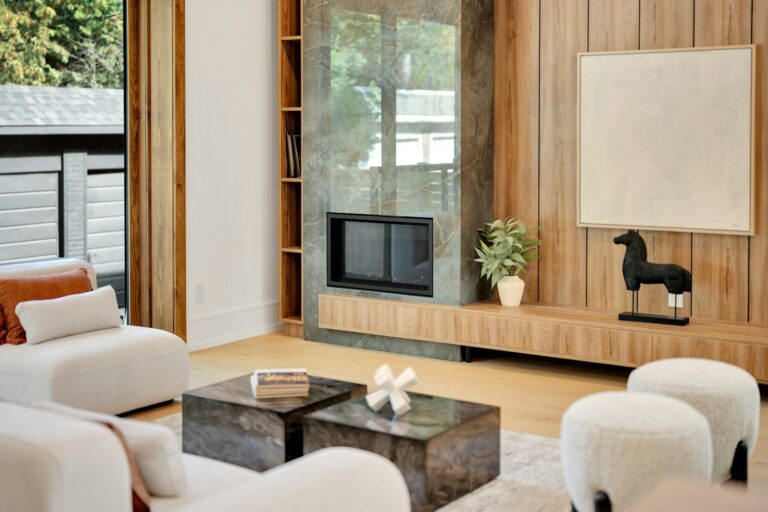
Over time, the things we live with begin to shape how a home feels. Furnishings and decor are often treated as finishing touches, but in reality, they play a much larger role. What we choose to bring into a space—and what we choose to leave out—affects how we move, rest, and live day to day.
Living thoughtfully means being selective. A chair isn’t just something to fill a corner, and an object on a shelf isn’t there to occupy space. Each piece carries weight, both physically and visually. When choices are made with care, a room feels settled rather than styled, personal rather than crowded.
Furnishings that work well tend to disappear into daily life. They support routine without demanding attention. Decor, at its best, does something similar—it adds warmth, meaning, or balance without overwhelming the space. Together, they create an environment that feels considered and lived in, rather than assembled all at once.
Choosing fewer pieces doesn’t mean living without comfort or character. It means making room for things that serve a purpose and stand up to daily use. When furnishings are selected carefully, they earn their place over time instead of being replaced at the first sign of wear.
Better pieces tend to have a quiet confidence. They don’t rely on novelty or trend to stand out. They’re built well, feel right in use, and age with some grace. In a home that values intention, durability matters as much as appearance—sometimes more.
Living with fewer furnishings also creates clarity. Spaces feel easier to move through, easier to care for, and easier to live in. There’s less visual noise and fewer decisions competing for attention. What remains feels deliberate rather than accidental.
This approach encourages patience. Instead of filling rooms quickly, you wait for the right piece. You live with empty space for a while. Over time, the home becomes a collection of choices made thoughtfully rather than a reflection of what was available at the moment.
Decor That Has A Reason to Be There
Decor works best when it’s intentional. In a well-considered home, objects aren’t placed simply to fill shelves or occupy surfaces. They’re there because they serve a purpose, hold meaning, or contribute to the way a space feels.
Often, the most satisfying pieces are the simplest. A lamp placed where it’s genuinely needed. A bowl that’s used every day. A book that’s been read and returned to the same spot. These objects become part of daily rhythm rather than visual noise. They feel settled, not staged.
Decor with purpose also leaves room for restraint. Not every wall needs something on it, and not every surface needs to be filled. Empty space gives the eye a place to rest and allows the pieces that remain to stand out naturally. In many ways, what’s left out matters just as much as what’s included.
When decoration is approached this way, a home begins to reflect real life. Objects gather meaning through use, time, and memory. The result isn’t a space designed to impress, but one that feels honest—shaped slowly by living rather than assembled all at once.
Letting A Home Evolve Slowly
A home doesn’t need to come together all at once. In fact, it’s often better when it doesn’t. Living in a space for a while reveals what’s missing, what works, and what never quite finds its place. Time becomes a useful tool, allowing decisions to be made with clarity rather than urgency.
When a home is allowed to evolve slowly, furnishings and decor are chosen in response to real needs. A chair is added because there’s a place to sit, not because a corner looks empty. An object stays because it’s used, not because it matches. This approach creates rooms that feel lived in rather than completed.
Patience also changes how a space is maintained. Pieces are repaired instead of replaced. Surfaces show signs of use. The home develops a sense of continuity, shaped by small adjustments rather than major overhauls. Nothing feels rushed, and nothing feels disposable.
Over time, this way of living creates a deeper connection to the space. A home becomes familiar, forgiving, and adaptable—less about presentation and more about support. The result isn’t perfection, but something better: a place that grows alongside the people who live there.
A Closing Reflection
Furnishings and decor shape more than the way a home looks—they influence how it feels to live there. When choices are made thoughtfully, a space becomes easier to inhabit, easier to care for, and more reflective of daily life rather than passing trends.
Choosing fewer, better pieces encourages patience and clarity. Decor with purpose adds meaning without excess. Allowing a home to evolve over time creates rooms that feel settled and personal, shaped by experience rather than urgency.
In the end, a well-considered home isn’t about having everything in place. It’s about living with what you choose, caring for it, and letting it serve you well. When furnishings and decor are approached with intention, they become part of a larger craft—one that values quality, restraint, and the quiet satisfaction of living thoughtfully.
